

After the Ayatollah: The Endgame for Iran and the Middle East
Israel pursues permanent fragmentation through centrifugal force, Iran faces an existential moment, and the Middle East scrambles for survival.
Summary
This 9000-word assessment draws on open-source reporting, verified casualty data from IAEA verification reports, commodity market data, and analysis from institutions including the Carnegie Endowment, CSIS, the Arms Control Association, the House of Commons Library, and the Atlantic Council, current as of March 5, 2026. All claims are sourced and hyperlinked throughout. Nonetheless, the prevailing fog of war and systematic disinformation require a grain of salt with every claim and piece of evidence used throughout this report.
On February 28, 2026, the United States and Israel launched Operation Epic Fury, a joint air campaign against Iran that killed Supreme Leader Ali Khamenei, destroyed the country’s air defences and navy, struck nearly 2,000 targets across 24 provinces, and systematically decapitated the political and military leadership of the Islamic Republic. Iran retaliated with over 500 ballistic missiles and 2,000 drones across nine countries, striking Israel, the UAE, Saudi Arabia, Qatar, Kuwait, and others. The IRGC declared the Strait of Hormuz closed. Brent crude surged above $82. Qatar halted all LNG production, removing 20% of global supply. Gulf stock markets plunged while the Tel Aviv exchange hit a record high.
This report assesses the strategic implications of the conflict across six dimensions.
First, Iran faces an existential crisis of its own making: decades of sectarian overreach, nuclear brinkmanship, and economic mismanagement produced the conditions for its destruction, though the scale of the current assault and its human toll, including the killing of an estimated 148 schoolgirls in a single strike, transcends any strategic rationalisation.
Second, Israel’s objective is state collapse rather than regime change, applying centrifugal force along ethnic fault lines in an environment where the reconstruction of a destroyed state has become near-impossible, with catastrophic spillover risks for Pakistan, the Arab Gulf, Türkiye, and Europe.
Third, the Gulf monarchies face the failure of the US-Israeli security architecture: their cities absorb missiles from a war they refused to join while Washington stonewalls interceptor resupply, and the UAE’s deep defence-industrial entanglement with Israel has compromised Gulf security more thoroughly than Iranian subversion ever managed.
Fourth, Türkiye confronts dual threats from a disintegrating Iran and an Israel already positioning Ankara as the next strategic adversary, driving a military-industrial acceleration and nuclear ambiguity without precedent in the Muslim world.
Fifth, the 20th century’s holdout regimes, from Iran to Venezuela to Cuba, are collapsing simultaneously while Russia proves unable to support its allies and China positions itself as the principal beneficiary of American overextension.
Sixth, the war has exposed the complete collapse of the rules-based international order and the strategic irrelevance of Europe, while validating the case for a Türkiye-Levant-Gulf integration corridor and simultaneously materially threatening it.
The situation as of March 5, 2026, is too volatile for any honest analyst to project outcomes with confidence.
The Endgame for Iran
The images emerging from Tehran, of craters, burning apartment blocks, civil defence teams pulling bodies from collapsed infrastructure, have for much of the past decade been the images of Damascus and Aleppo, cities that Ayatollah Ali Khamenei and the Iranian regime spent an estimated $30–50 billion sustaining under bombardment in the service of his sectarian empire. Khamenei bankrolled the Assad regime’s war against the Syrian people, armed Hezbollah to the teeth, funded the Houthis, cultivated a network of Shia militias across Iraq, and pursued nuclear ambiguity while his own population slid into destitution. He is no victim. In some sense, Khamenei died as he forced millions of others to live: under airstrikes, with nowhere to go. The Islamic Republic’s leadership made catastrophic strategic errors over two decades, building simultaneously a sectarian architecture that alienated every major Sunni power in the region, an ambiguous nuclear programme that gave the United States and Israel the pretext they needed, and an economy so hollowed by sanctions, corruption, and mismanagement that it could not sustain even basic air defences when the moment came. Iran set the strategic scene for its own destruction. That does not make what followed just. It does make it explicable.
On February 28, 2026, at approximately 2:30 AM EST, the United States and Israel launched simultaneous air campaigns against Iran. The American operation, codenamed Operation Epic Fury, was paired with Israel’s Operation Roaring Lion, the largest combat sortie in Israeli Air Force history. By March 4, CENTCOM confirmed nearly 2,000 Iranian targets struck with over 2,000 munitions across 24 of Iran’s 31 provinces. The opening strike hit the Leadership House compound in Tehran, killing Khamenei and his wife, among other members of his family. Within 48 hours, confirmed dead included Chief of Staff Abdolrahim Mousavi, former SNSC Secretary Ali Shamkhani, SPND chief Hossein Jabal Amelian, and at least 40 senior officials. The Assembly of Experts was bombed while convening to elect a new Supreme Leader. Iran’s parliament, broadcasting headquarters, and Supreme National Security Council were all destroyed. The target list tells the story: every institution capable of selecting a successor, issuing orders, or broadcasting to the population was hit. This was systematic political decapitation.
Iran’s air defences, a layered combination of Russian S-300 and Tor systems, Chinese HQ-9B batteries, and domestic Bavar-373 platforms, collapsed comprehensively under coordinated electronic warfare, cyber operations, and physical destruction. Multiple S-300 radar arrays were destroyed in the initial waves. The US SEAD campaign reduced Iranian radar coverage to near zero within the first 24 hours. These systems had already been severely degraded during the June 2025 Twelve-Day War and never fully recovered. Trump claimed Iran had “no air detection, or radar.” An Israeli F-35I scored what appears to be the first air-to-air kill of a manned fighter by a fifth-generation stealth aircraft, shooting down an Iranian Yak-130 over Tehran. The IAEA confirmed damage to entrance buildings at Natanz and access roads at Fordow, with “some localised radioactive as well as chemical release inside affected facilities,” though no major off-site contamination was detected. The nuclear programme, already set back by the June 2025 strikes, has sustained further damage, the full extent of which remains unclear.
Iran’s retaliation, designated Operation True Promise IV, launched over 500 ballistic missiles and more than 2,000 drones at nine countries: Israel, Bahrain, Iraq, Jordan, Kuwait, Oman, Qatar, Saudi Arabia, and the UAE. A NATO missile defence system intercepted an Iranian ballistic missile heading toward Türkiye. The UAE absorbed 174 ballistic missiles, 689 drones, and 8 cruise missiles; Dubai International Airport was struck, the Burj Al Arab was damaged, and AWS data centres were knocked offline. Qatar’s LNG facilities at Ras Laffan and Mesaieed were hit, prompting QatarEnergy to halt all production and removing roughly 20% of global LNG supply from the market. In Kuwait, the US Embassy was struck and closed indefinitely; three Kuwaiti F/A-18s shot down three US F-15Es in a friendly-fire incident. The volume of Iranian launches dropped 86% for missiles and 73% for drones from Day 1 to Day 5, indicating severe stockpile attrition. The IRGC declared the Strait of Hormuz closed on March 2. Iran’s navy, such as it was, was annihilated; Admiral Cooper stated that there is “not a single Iranian ship underway” in the Arabian Gulf, Strait of Hormuz, or Gulf of Oman. On March 4, a US submarine torpedoed and sank the frigate IRIS Dena in international waters off Sri Lanka, killing at least 87 of its 180 crew, the first submarine kill of a surface vessel since the Falklands War. The Dena had been returning from India’s International Fleet Review at Visakhapatnam, where Iran’s naval commander had met India’s Chief of the Naval Staff just days earlier. That an Iranian warship could be sunk by an American torpedo while transiting from a joint exercise with India, with Indian naval officers still processing the diplomatic implications, encapsulates the scale of Iran’s foreign policy failure: it maintained relationships it assumed would offer at least informal protection, and they offered nothing. At least 2,400 Iranians have been killed by Day 6 according to the Hengaw Organisation for Human Rights, including an estimated 310 civilians. The deadliest single incident was a strike on a girls’ elementary school in Minab, less than 60 metres from an IRGC naval base, which killed an estimated 148 to 180 schoolgirls.
The multi-front picture extends beyond Iran’s borders. In Iraq, Iran’s last remaining sphere of proxy influence, the situation is fracturing in real time. Iran-backed militias have fired at US bases in Erbil. On March 2, there were reports of thousands of Kurdish PJAK seeking to launch a military offensive into Iranian territory from Iraqi Kurdistan under the newly formed Coalition of Political Forces of Iranian Kurdistan. CNN reported that the CIA is negotiating with Kurdish groups to support an internal uprising. The KRG’s territory may possibly be used as a staging ground for operations into Iran. In Lebanon, Hezbollah violated its 2024 ceasefire on March 2, firing rockets at an Israeli military base near Haifa. Israel has launched airstrikes on Lebanon in response. The war is rapidly metastasising.
The question of who governs Iran in Khamenei’s absence has no clear answer. Within 48 hours of his death, a three-member leadership council was formed in accordance with the constitution to manage the transition. President Masoud Pezeshkian declared that seeking revenge is Iran’s “duty and legitimate right.” But Iran’s power structure has never been a single point of authority; it is a complex, multilayered system in which elected government, the IRGC and its vast economic holdings, the regular military (Artesh), the Basij paramilitary, the clerical establishment, and multiple ideological and factional currents all exercise influence through overlapping and sometimes competing hierarchies. The destruction of the Assembly of Experts, the Supreme National Security Council, and much of the senior military leadership has simultaneously severed several of these nodes, but others remain intact. The IRGC, in particular, possesses its own chain of command, intelligence apparatus, economic infrastructure, and internal cohesion. Whether the system collapses into factional infighting, consolidates around the IRGC as a garrison state, or manages a genuine constitutional succession is unknowable at this stage. What is clear is that the decapitation was not total, and assumptions of rapid state collapse may prove premature.
The human and economic costs of the first six days are already staggering, and they extend far beyond Iran. The Strait of Hormuz, through which approximately 20% of global seaborne oil transits, is functionally closed. The Houthis simultaneously announced the resumption of attacks on Red Sea shipping, threatening the Suez Canal alternative and creating a pincer on global maritime trade that has no modern precedent: both of the Middle East’s critical chokepoints are now simultaneously contested. Roughly 3,200 ships sit idle in the Gulf, with another 500 waiting outside. Brent crude surged from approximately $73 to above $82, with Goldman Sachs warning it could reach $100 if disruption persists for five additional weeks. VLCC freight rates hit an all-time record of $423,736 per day. War-risk insurance has been cancelled for ships transiting the Gulf from March 5. LME aluminium surged to $3,418 per ton as Gulf smelters representing 8–9% of global output declared force majeure; Qatar’s Qatalum began a controlled shutdown that could take six to twelve months to reverse. Urea fertiliser prices spiked at the worst possible moment, coinciding with Northern Hemisphere spring planting; 25–33% of globally traded nitrogen transits through Hormuz. The Dubai DFM plunged 4.65% on reopening after a two-day suspension. Saudi and Egyptian markets slumped. Kuwait suspended trading entirely. The Tel Aviv Stock Exchange, by contrast, surged 4.61% to a record high.
The information environment is saturated and deliberately polluted. On March 4, four reports broke simultaneously, each containing verifiable elements wrapped in strategic amplification. The Washington Post reported that MBS had privately lobbied Trump for strikes despite publicly favouring diplomacy; Saudi Arabia flatly denied it, and Chatham House had documented Middle Eastern governments lobbying against the attack. Middle East Eye reported Türkiye preparing a buffer zone in Iranian Azerbaijan, framing genuine contingency planning as aggressive pan-Turkic intent. OC Media reported Azerbaijani troops deployed to the Iranian border; Baku officially declared neutrality. Israeli outlet i24NEWS ran an exclusive on thousands of Kurdish fighters entering Iran, confirmed in part but amplified well beyond verified scale. BBC Verify’s Shayan Sardarizadeh stated this conflict “might have already broken the record” for AI-generated disinformation in wartime. The pattern across all four stories is consistent: each contains a kernel of reality, strategically leaked, amplified, or of dubious origin, designed to stretch the IRGC’s attention across multiple ethnic and geographic fronts simultaneously. The purpose is to provoke a response that fuels the very centrifugal forces the reports describe. Whether Iran takes the bait remains to be seen.
The Endgame for Israel
The negotiations were a ruse. On this point, the evidence is by now overwhelming. Five rounds of US-Iran talks took place between April and May 2025, mediated by Oman, all indirect and all inconclusive. Trump’s 60-day ultimatum expired on June 12. Israel struck on June 13, two days before the scheduled sixth round. The Twelve-Day War killed over 30 senior IRGC commanders, at least 14 nuclear scientists, and set back Iran’s nuclear programme by months. On June 21, the US entered with Operation Midnight Hammer: seven B-2 bombers dropped 14 GBU-57A/B Massive Ordnance Penetrators on Fordow and Natanz, the first operational use of the largest conventional bombs in the American arsenal. A ceasefire was brokered on June 24. Talks resumed tentatively in February 2026, with a round in Oman on February 6 and a final round in Geneva around February 26. Omani mediators spoke of unprecedented openness. Two days later, Operation Epic Fury launched. According to the Omani foreign minister, both the June 2025 and February 2026 strikes occurred at moments when negotiations had achieved significant progress. The Arms Control Association assessed that the June strikes were designed to sabotage the talks as much as they were intended to damage Iran’s nuclear capabilities.
The pattern is unmistakable: military preparations ran in parallel with diplomacy throughout, and strikes were launched within 48 hours of diplomatic sessions both times. The two carrier strike groups (USS Abraham Lincoln and USS Gerald R. Ford), the THAAD battery deployments, the F-22 repositioning to Gulf bases, and the pre-positioning of B-2 bombers at Diego Garcia all occurred during the diplomatic period, not after it. These preparations are inconsistent with genuine negotiation. They are consistent with using talks as cover for positioning. The sceptic’s response, that diplomacy was exhausted and strikes followed its failure, does not survive contact with logistical realities: you do not forward-deploy 200 aircraft and two carrier groups as a contingency. You deploy them because you intend to use them. The talks were a cover for positioning.
The events on October 7, 2023, accelerated an existing trajectory. Israel has regarded the destruction of Iran’s nuclear and military capabilities as the strategic crown jewel for at least two decades, across governments of every political composition. What October 7 provided was the political licence to act, both domestically and in Washington, and a sequence of conflicts that systematically dismantled Iran’s proxy architecture before the final blow. Hamas was ground down in Gaza. Hezbollah’s senior leadership was decimated from September 2024 onward, its military capabilities severely curtailed by Israeli bombardment and the closure of Syrian supply routes. The Assad regime collapsed in December 2024, severing Tehran’s land bridge to the Mediterranean and writing off decades of investment. The Houthis were degraded. Iran’s Axis of Resistance, which at its peak could threaten Israel from four directions simultaneously, was reduced to a shell. Each step narrowed Iran’s retaliatory options and expanded Israel’s freedom of action. Whether the war came in 2026 or 2036, its arrival was a matter of timing and opportunity, not of principle.
The stated objective is regime change. The actual objective appears to be something more radical: state collapse. Former Israeli government adviser Daniel Levy told Al Jazeera on March 3 that Israel has “no real interest in smooth regime change” and that most Israeli leaders “regard that as a kind of fairytale.” Israel is “more interested in regime and state collapse,” he said. “They want Iran to implode, and if the spillover from that takes in Iraq, the Gulf and much of the region, so much the better.” Danny Citrinowicz, an Iran expert and senior researcher at Tel Aviv’s Institute for National Security Studies, stated Israel’s position bluntly, “If we can have a coup, great. If we can have people on the streets, great. If we can have a civil war, great. Israel couldn’t care less about the future . . . [or] the stability of Iran.”
The Jerusalem Post editorialised in June 2025 for a Middle East coalition supporting Iran’s partition, with security guarantees to the Sunni, Kurdish, and Baloch regions willing to break away. 32 Knesset members signed a 2023 declaration calling for Iran’s partition into six parts. The FDD’s Brenda Shaffer has advocated Iran’s fragmentation along ethnic lines comparable to Yugoslavia. Netanyahu addressed Iranians in Farsi after Khamenei’s death, urging them to “come to the streets, come out in your millions, to finish the job,” while Israel simultaneously declared that any new supreme leader would be a target for elimination.
This is consistent with a long pattern most explicitly articulated in the 1996 report, “A Clean Break: A New Strategy for Securing the Realm”, which has deeply influenced Israeli grand strategy. Israel has applied centrifugal force to rival states for decades: cultivating Kurdish autonomy in Iraq as a counterweight to Baghdad, building alliances with Druze and Maronite factions in Lebanon, supporting South Sudanese independence to weaken Khartoum, and, more recently, recognising Somaliland via the UAE to fracture Somali sovereignty. The strategy is consistent: identify ethnic, sectarian, or regional fault lines within adversary states and apply resources to widen them. Iran represents the application of this logic at an unprecedented scale.
The analytical framework that best captures Israel’s strategy is the distinction between centripetal and centrifugal forces, articulated by Ali Terrenoire in his work on coordination crises and state formation. Centripetal forces are those that pull political coordination toward the centre, scaling up collective action through institutions, parties, and eventually the state itself. Centrifugal forces disperse coordination outward, fragmenting power away from the centre toward smaller, weaker hierarchies or toward individuals who lack the capacity to rebuild what was destroyed. Israel’s strategy in Iran is the deliberate application of centrifugal force from without: ethnic separatism promotion, CIA coordination with Kurdish militants, information warfare amplifying Baloch, Azeri, and Arab grievances, and the systematic destruction of every institution capable of coordinating a national response. The danger, as Terrenoire argues, is that the background conditions of the 21st century have tipped decisively toward centrifugal dominance. The capacity for collective action, the ability of dispersed populations to organise and build new institutions, has been eroding globally for decades. The state, in this framing, becomes something like a vestigial technology from an earlier era of political capacity: still maintained where it exists, but extraordinarily difficult to construct from scratch once destroyed. Iraq in 2003, Libya in 2011, Syria’s 14-year disintegration, and the current Sudan conflict are all examples of this logic in motion. Only Syria has thus far been able to break the pattern. Iran, with 90 million people across a territory the size of Western Europe, would represent the largest such experiment in history.
The fracture lines in Iran include the Kurds (10-15% of the population), Azerbaijanis (approximately 16%), Baloch (2-3%), and Arabs (approximately 2%), all of whom have potential organisations, cross-border kinship ties, and historical grievances that external actors are actively exploiting. The CPFIK’s formation on February 22, uniting five Kurdish parties under a self-determination banner, is the most organised separatist threat to emerge in Iran in decades. Baloch groups operate across a border zone extending into Pakistan and Afghanistan. Arab separatism in oil-rich Khuzestan carries weight disproportionate to its demographic size because of the province’s petroleum infrastructure. Yet the centripetal counter-forces are substantial. Iranian Azerbaijanis are predominantly Shia, have produced multiple Iranian dynasties, and most frame demands in terms of cultural rights rather than independence. Responsible Statecraft notes that Iran is a 90-million-strong nation with a deep sense of historical and cultural identity, and the Iran-Iraq War’s rally-around-the-flag legacy runs deep. The surviving Iranian leadership has already pivoted from religious legitimacy to survivalist nationalism, with Ali Larijani warning publicly that Israel’s ultimate goal is the partition of Iran. Whether this nationalist framing can hold under sustained bombardment, economic collapse, and coordinated ethnic insurgency is an open question.
The consequences of failure would not be confined to Iran. Baloch separatism does not stop at the Iranian border but extends directly into Pakistan, a nuclear-armed state of 240 million people whose own Balochistan province has experienced decades of insurgency. Kurdish autonomy in a collapsed Iran would embolden movements in Iraq and Türkiye, threatening two states that are central to the corridor thesis Vizier has developed over the past year. Azeri separatism would draw in Azerbaijan and, by extension, Türkiye and Russia. Refugee flows could reach tens of millions; the EU Agency for Asylum has warned of displacement “of unprecedented magnitude.”#
Pakistan deserves particular attention here. It is the only Muslim-majority state that can credibly be described as a hard sovereign power: it possesses nuclear weapons, an intelligence apparatus of considerable reach, and an air force that held its own against India during the May 2025 four-day war triggered by the Pahalgam attack in Indian-administered Kashmir, in stark contrast to Iran’s total aerial collapse against Israel. The US-China Economic and Security Review Commission described Pakistan’s performance as having “showcased” its military capabilities. Pakistan’s deepening ties to both Türkiye and Saudi Arabia, and the emerging architecture of a mutual defence pact between these three states, represent precisely the kind of centripetal counterweight that Israel’s strategy is designed to prevent. Israel’s ring of fire works only if no peer competitor can consolidate on the other side. Pakistan, with its nuclear deterrent and hardened military institutions, is the one actor in the Muslim world that cannot be subjected to the same centrifugal treatment. This is why Israeli strategists, from Bennett’s February 17 speech onward, have begun framing the Türkiye-Saudi-Pakistan axis as the next threat horizon, even before the current war with Iran has concluded.
Questions on Gulf Rapprochement
The question this war poses to the Gulf monarchies is not whether they can afford to defend themselves. Nor is it what side they wish to take: they fear the outcome regardless. It is whether the security architecture they have built over four decades, anchored to Washington and increasingly entangled with Tel Aviv, actually serves their interests at all. The evidence from the past six days suggests that it does not.
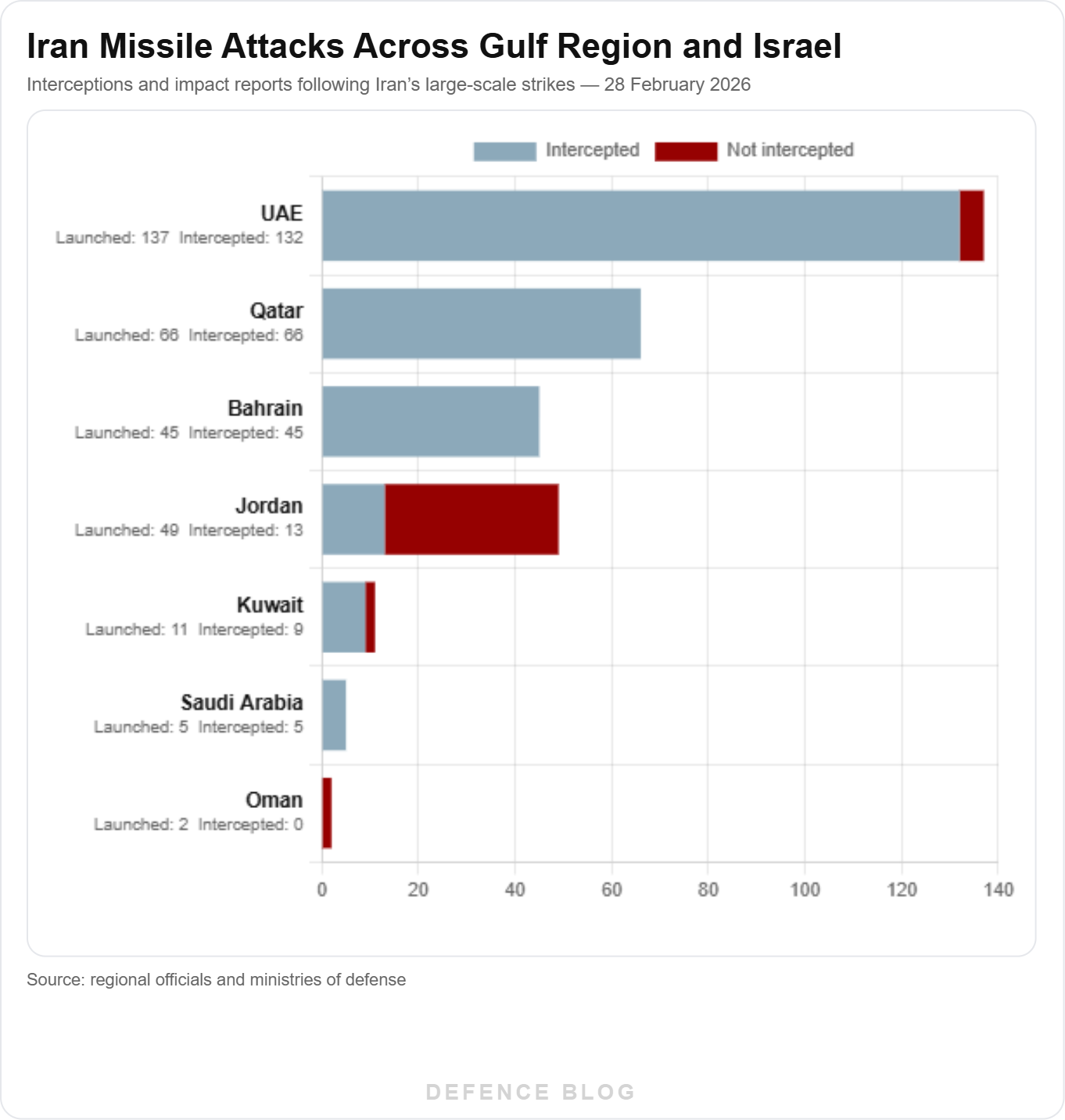
Before the strikes began, all six GCC members categorically refused to allow their bases and airspace to be used against Iran. They were attacked anyway. The UAE absorbed 174 ballistic missiles, 689 drones, and 8 cruise missiles. Qatar lost its entire LNG export capacity. Kuwait’s airport was struck. The US Embassy in Riyadh was hit by drone fire. Carnegie described the predicament as an impossible choice: strike back and be seen as fighting alongside Israel, or remain passive while your cities burn. Neither option serves Gulf interests. Both serve Israeli ones. The interceptor crisis compounds the vulnerability. During the June 2025 war, the US deployed approximately 150 THAAD interceptors to defend Israel, roughly a quarter of its total stock. Bloomberg reported stocks as dangerously low. Middle East Eye reported in March 2026 that the US is “stonewalling” Gulf requests to replenish interceptor supplies as pressure mounts on the Gulf states to join the war effort. A single THAAD interceptor costs approximately $11 million, meaning production cannot keep pace with consumption. The UAE has burned through a significant portion of an interceptor stockpile that took years to build, and Washington’s priority is Israel, not Abu Dhabi.
The UAE’s predicament is, in significant part, self-inflicted. Since the Abraham Accords in 2020, Abu Dhabi has positioned itself as Israel’s deepest defence-industrial partner in the Arab world. Elbit Systems signed a $2.3 billion deal with the UAE in December 2025, the largest in the company’s history, for advanced aircraft protection systems to be manufactured inside the Emirates over eight years. IAI sold batteries of its Barak MX air defence system to Abu Dhabi shortly after normalisation. EDGE Group acquired a 30% stake in Thirdeye Systems, an Israeli company specialising in anti-drone technology. The two countries share data on common threats through a joint intelligence platform nicknamed Crystal Ball. 34 Israeli arms companies participated at IDEX 2025 in Abu Dhabi. Arab officials from several countries told Middle East Eye that the UAE is more supportive of Israeli plans for the Gaza Strip than any of its Gulf neighbours. One Saudi analyst described it plainly: the UAE has been “preparing itself to be the disruptor of the Arab consensus,” and that is “the main utility of the UAE for the US and Israel.”
The result is that the Abraham Accords defence relationship has compromised Gulf security more thoroughly than Iran and Hezbollah ever managed through direct subversion. Tehran’s intelligence penetration of the Gulf was always limited by the fundamental asymmetry between Shia networks and Sunni-majority societies. Israel’s penetration, by contrast, came through the front door in the form of capital flows, surveillance technology contracts, defence procurement, shared intelligence platforms, and the political alignment of Abu Dhabi’s leadership with Israeli strategic objectives in Gaza, Syria, and the Horn of Africa. The UAE became the vector through which Israeli military technology, intelligence architecture, and strategic priorities entered the Gulf ecosystem. When Iran’s retaliatory missiles struck Dubai, they struck a city whose defence infrastructure was partly designed, supplied, and integrated by the very state that provoked the attack. The Emirati population is now paying the price for a strategic alignment it was never consulted on and from which it derives no security benefit.
The question is what follows. The Saudi-UAE divergence had been widening for over a year before this war, driven by fundamentally different strategic doctrines. In December 2025, Saudi aircraft struck a UAE-linked weapons shipment at Mukalla port in Yemen, the first kinetic exchange between nominal allies, after UAE-backed Southern Transitional Council forces launched offensives in Hadramawt and Al-Mahra provinces near Saudi borders. The fissure extended across multiple theatres: in Sudan, Saudi Arabia supports the Sudanese Armed Forces while the UAE stands accused of arming the Rapid Support Forces; in Somalia, the UAE recognised breakaway Somaliland and invested $440 million in Berbera Port while Saudi Arabia condemned Israel’s recognition of Somaliland. Analysts at War on the Rocks characterised the split as reflecting Saudi “de-escalatory developmentalism,” which treats state collapse as the primary danger, versus Emirati “pre-emptive activism,” which intervenes aggressively to shape outcomes before they deteriorate. Now both face Iranian missile fire, and MBS has phoned MBZ expressing solidarity. But shared threat does not erase structural disagreement.
Saudi Arabia’s own record here is not clean. Riyadh pursued the normalisation track with Israel through the Biden-era negotiations, entertaining the Abraham Accords framework on the condition of Palestinian statehood, a security pact with Washington, and a civilian nuclear programme. MBS met with Kushner and Israeli envoys repeatedly. The kingdom was willing, in principle, to follow the UAE’s path if the price was right. That this failed was largely a function of Israeli intransigence on Palestine, not Saudi principled opposition to normalisation itself. The Saudi pivot toward military independence and regional alliance-building with countries like Pakistan and Türkiye is not a long-standing conviction; it is a correction, born of the recognition that the American security umbrella is unreliable and that Israeli partnership carries costs that the UAE’s experience has made visible. Acknowledging this does not weaken the pivot; it makes it more credible because it is driven by strategic learning rather than ideology.
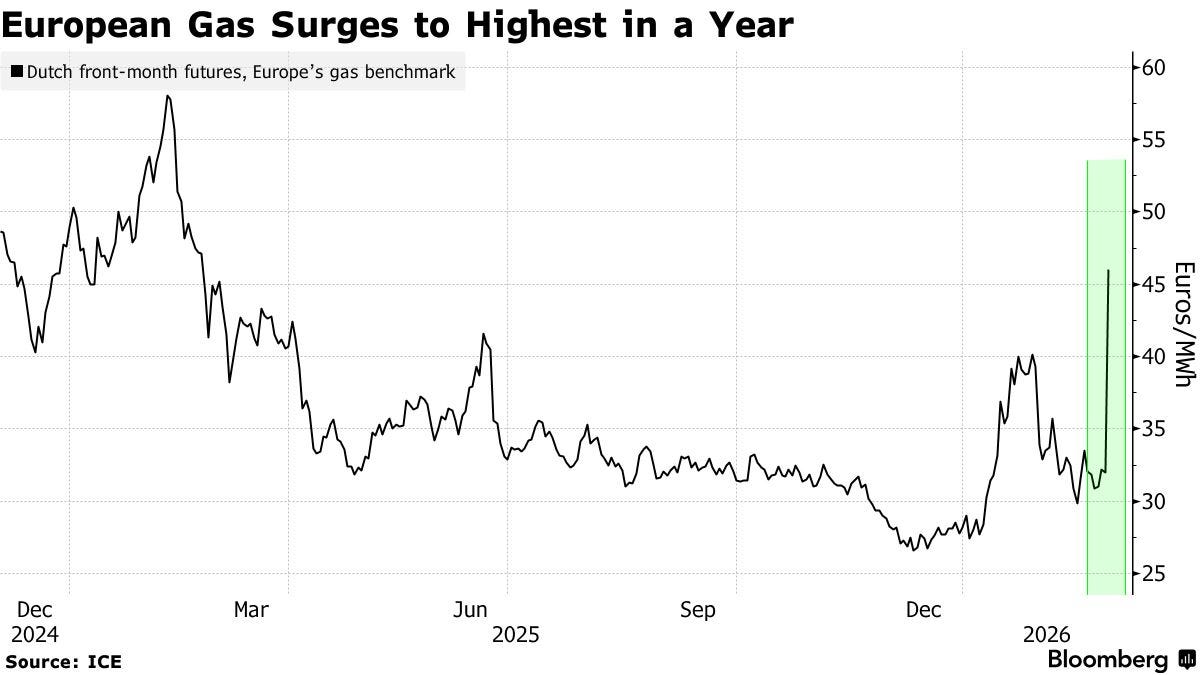
Qatar occupies a distinct and exposed position. It hosts Al Udeid Air Base, the largest US military installation in the Middle East and CENTCOM’s forward headquarters, making it simultaneously a target for Iranian retaliation and a platform for the very strikes that provoked it. QatarEnergy’s halt of all LNG production has removed roughly 20% of global supply, devastating European energy markets. Qatar has historically maintained a diplomatic channel with Tehran that neither Saudi Arabia nor the UAE possessed, and it co-funded Syria’s reconstruction alongside Türkiye and Saudi Arabia. Whether Doha now reassesses the American presence on its soil, and what terms it extracts for continued hosting, will be one of the most consequential quiet negotiations of the coming months.
The deeper question is whether Saudi Arabia uses this moment to recognise, finally and operationally, that the US-Israel axis does not have Saudi interests at heart, that the American security umbrella is a transactional instrument that can be withdrawn or redirected at will, and that the only durable path to Gulf security runs through military-industrial sovereignty, indigenous production capacity, and regional alliances built outside Washington’s orbit. Türkiye-Saudi partnerships, the mutual defence pact architecture with Pakistan, and the corridor integration thesis all point in this direction. Whether the UAE attempts to leverage the crisis to reassert its position, or whether Riyadh reins it in and leads a genuine pivot toward strategic independence, will determine the character of Gulf coordination for a generation.
Türkiye Races Against Time
Türkiye faces a threat environment without precedent in the republic’s history, and it is responding with a military-industrial acceleration without precedent either. To the east, Iran is disintegrating under bombardment, raising the prospect of state collapse on a 534-kilometre shared border, refugee flows potentially numbering in the millions, Kurdish insurgent sanctuaries in a power vacuum, and the possible emergence of an ungoverned nuclear-capable territory. Türkiye has already built a 204-kilometre security wall along its border in Van province. Middle East Eye reported that senior foreign ministry officials briefed lawmakers on contingency scenarios, including a buffer zone inside Iranian territory.
To the west and south, Israel is already being positioned as the next target. On February 17, eleven days before the strikes on Iran, former Prime Minister Naftali Bennett delivered a landmark speech at the Conference of Presidents of Major American Jewish Organizations declaring that “Türkiye is the new Iran.” He called Erdoğan “sophisticated, dangerous,” accused Ankara and Doha of “nourishing the Islamic Brotherhood monster,” warned of a “hostile Sunni axis with nuclear Pakistan,” and stated that Türkiye was attempting to “flip Saudi Arabia against Israel.” His strategic prescription was explicit: “do everything to accelerate the fall” of Iran’s regime while simultaneously preparing to confront Türkiye. Bennett is not a marginal figure. He is expected to run well in Israel’s elections later this year, and his framing of Türkiye as a structural adversary represents an emerging bipartisan consensus within Israel’s security establishment that transcends the Netanyahu government.
The institutional infrastructure for this discursive shift is already being constructed. The Foundation for Defense of Democracies, Washington’s most influential pro-Israel think tank, has been running a sustained campaign against Türkiye through its dedicated Türkiye Program, led by Sinan Ciddi. The FDD has published analyses framing Türkiye’s defence industry as a threat, its relationship with Pakistan as dangerous, and its involvement in Syria as destabilising. It has explicitly advocated a 3+1 partnership of the United States, Greece, Israel, and Cyprus as a counter-Türkiye architecture, with the stated aim of deepening defence ties “eyeing Türkiye.” Whether this discursive campaign translates into operational military planning against Türkiye is a separate question, and the distinction matters. But the pattern is clear: the same institutional ecosystem that spent two decades building the case for confrontation with Iran, from think-tank reports through congressional lobbying to weapons procurement, is now being redirected toward Türkiye. Discourse precedes action and establishes the frame within which policy becomes thinkable. The Israel-Greece-Cyprus trilateral held its 10th summit in December 2025, signing comprehensive military cooperation agreements covering joint exercises, UAV cooperation, and discussions on a rapid-deployment brigade. Greece is pursuing $27 billion in military modernisation, heavily reliant on Israeli weapons: PULS rocket artillery, LORA ballistic missiles, and an “Achilles Shield” air defence system. Netanyahu used the summit to send a direct warning to Türkiye, declaring that “those who fantasise they can re-establish their empires and their dominion over our lands” should “forget it.” The eastern Mediterranean is being reorganised around an anti-Türkiye axis, and the institutional, financial, and military resources being committed to it are substantial.
Syria lies between Türkiye and Israel, and both understand its significance. Israel considers Syria the new frontline with Türkiye, the buffer through which Turkish influence projects southward toward the Gulf and through which the corridor thesis becomes geographically operational. Türkiye, Saudi Arabia, and Qatar have invested heavily in Syria’s reconstruction: the Syrian-Saudi Investment Forum in July 2025 produced 47 agreements worth $6.4 billion; Turkish-Syrian economic integration has accelerated through the JETCO framework established in August 2025; and Qatar committed $4 billion to rebuild Damascus International Airport and Syria’s power grid. A stable, unified Syria is the linchpin of the corridor. Israel’s continued occupation of the Quneitra buffer zone and parts of southern Syria, its airstrikes on Syrian territory, and its explicit interest in keeping Syria weak all serve to prevent the corridor from consolidating. The war in Iran has temporarily redirected attention, but the contest over Syria’s future has only intensified as a result. If Iran collapses, the corridor becomes more urgent and more viable; if it survives as a weakened garrison state, the corridor becomes more necessary as a hedge. Either way, Syria is where the Israeli and Turkish visions for regional order collide.
Türkiye’s response to this dual threat has been a defence-industrial mobilisation without parallel in the Muslim world. The 2026 defence and security budget reached approximately $27.3 billion, representing roughly 2.3% of GDP. Defence and aerospace exports surpassed $10 billion for the first time in 2025, a figure that would have been unthinkable a decade ago. The programme list reads like a catalogue of sovereign military capability: the KAAN fifth-generation fighter, whose first non-demonstrator prototype is targeted for flight by the end of April 2026, with a serial production contract to be signed this year; the Bayraktar Kızılelma unmanned combat aircraft, now in low-rate serial production and described by Selçuk Bayraktar as “the future of aviation combat”; the Steel Dome multi-layered air defence system, targeted for operational status by 2030; the Tayfun ballistic missile, which conducted a warhead test firing in December 2025; a 60,000-ton aircraft carrier in the design phase alongside 39 naval vessels being built simultaneously; and ammunition production capacity being scaled from 4,000 rounds annually to 65,000, with a target of one million. The KAAN has been publicly displayed with Saudi markings, signalling that Riyadh is exploring investment in the programme. The HÜRJET advanced trainer secured a €2.6 billion export contract with Spain. Indonesia has signed for KAAN. Türkiye is building a defence-industrial base that can arm not only itself but its allies, and it is doing so at a pace that Israeli and American planners are only beginning to reckon with. The trajectory is extraordinary. But a sober assessment must note the gap between announcement and operational readiness. The KAAN has not yet flown in its production configuration. Steel Dome is targeted for 2030, not 2026. The Kızılelma is in low-rate serial production, not full operational deployment. The ammunition scaling targets are ambitions, not achievements. The systems that would matter most in a confrontation with a fifth-generation adversary, integrated air defence, stealth fighters, deep-strike cruise missiles with indigenous engines, are years from full operational capability. Türkiye is in a race against time, and it knows it.
Türkiye also carries domestic political vulnerabilities. The Kurdish question within Türkiye itself remains unresolved, and the PKK’s historical relationship with Israeli intelligence provides a potential lever that Tel Aviv could exploit in any escalation. The Turkish economy, while large, is under pressure from persistent inflation and lira depreciation, which constrains the real purchasing power of defence spending. And Türkiye’s NATO membership, while unreliable as a defensive shield (72% of Turks do not trust the alliance), simultaneously constrains Israel’s freedom of action against it: an attack on a NATO member would, at minimum, trigger a political crisis within the alliance that neither Washington nor Tel Aviv wants. These factors moderate the threat picture without eliminating it.
Erdoğan’s response to the war in Iran reflects these constraints. He condemned the strikes as a clear violation of sovereignty while simultaneously calling Iran’s retaliatory strikes on Gulf states “unacceptable, regardless of the circumstances.” This dual condemnation is genuine, not performative. Türkiye needs stability above all else. A collapsed Iran, with millions of refugees flooding across the border, Kurdish insurgent sanctuaries in a power vacuum, and the possible emergence of an ungoverned nuclear-capable territory, would make Türkiye the first victim of the chaos. Ankara has no interest in the Islamic Republic surviving in its current form, yet it emphatically opposes the alternative that Israel appears to be engineering. Analysts at Brookings assessed that Türkiye “doesn’t want another war at its doorstep” and “fears the day after.”
The nuclear question is being raised. On February 9, 2026, Foreign Minister Hakan Fidan told CNN Türk that if Iran acquires nuclear weapons, Türkiye “may inevitably be forced to join the same race.” He declined to answer when asked directly whether Türkiye should possess nuclear weapons, describing the issue as “high-level strategic.” In July 2025, Fidan described the NPT as “structurally unfair,” arguing that the framework is unsustainable in a world where Israel possesses an undeclared arsenal of an estimated 80 to 400 warheads outside international oversight. Erdoğan himself argued in 2019 that he could not accept a world in which the five permanent Security Council members could possess nuclear weapons while Türkiye could not. A July 2025 poll indicated that 71% of Turkish respondents support developing a national nuclear weapon. 72% do not believe NATO would defend Türkiye in the event of aggression. Türkiye’s first nuclear power plant at Akkuyu, built by Russia’s Rosatom, is expected to begin operations between 2026 and 2028, and further plants are planned with South Korean or Chinese involvement. The Centre for Eastern Studies (OSW) characterises Ankara’s approach as deliberate strategic ambiguity, refraining from explicit declarations while gradually expanding civilian nuclear infrastructure and outlining red lines that could trigger weaponisation. Given the threat environment Türkiye now faces, on two fronts simultaneously, with a NATO alliance it does not trust, and American security guarantees it considers unreliable, the pursuit of a nuclear deterrent would be a rational, if transformative, strategic decision. The war in Iran has made this calculus more urgent.
The End of the 20th Century
In January 2026, the United States launched Operation Absolute Resolve against Venezuela, bombing Caracas, disabling air defences, and physically abducting President Nicolás Maduro from his compound in a special forces raid. He now sits in a Brooklyn jail awaiting trial on narcoterrorism charges. Cuba, which lost 32 citizens in the Venezuelan operation, has spent the months since asking whether it is next; the Trump administration has done little to discourage this assumption. Russia, the traditional patron of both, is consumed by its war in Ukraine, unable to project power beyond its immediate theatre and watching its weapons systems humiliated in Iranian service: the S-300 batteries it sold to Tehran collapsed under American electronic warfare within hours. Rosatom evacuated staff from Iran’s Bushehr reactor. Moscow pushed for a UN Security Council emergency session and issued stern statements. It did nothing material. It could not.
Iran, Venezuela, Cuba, and Russia: the 20th century’s holdout regimes, built on revolutionary ideology, resource rents, and Cold War-era alliance structures, are simultaneously collapsing or cornered. The Islamic Republic, founded in 1979, may not survive 2026 in its current form. Cuba’s economy has contracted every year since 2019, and its protector has been removed from the board. Russia’s conventional military credibility has been shattered in Ukraine and now again, vicariously, in Iran. These were the states that defined the “anti-imperialist” axis for half a century, and they are being dismantled or degraded in rapid succession. The old order is dying. What replaces it is the question.
The sinking of the IRIS Dena illustrates a quieter dimension of this collapse. India hosted Iran’s naval commander at the International Fleet Review in Visakhapatnam in February 2026, conducted joint exercises through MILAN, and watched as an American submarine torpedoed the departing Iranian frigate off Sri Lanka’s coast while the Sri Lankan navy pulled bodies from the water. India, the world’s third-largest oil importer and heavily dependent on Gulf crude transiting the Strait of Hormuz, has been conspicuously silent on the conflict. The India-Middle East-Europe Economic Corridor (IMEC), announced with fanfare at the 2023 G20 summit as Washington’s answer to China’s Belt and Road, is now functionally dead. Its route runs through the UAE and Israel, both under missile fire, and Saudi normalisation with Israel, which was its political prerequisite, is unthinkable for the foreseeable future. India’s relationship with Iran, such as it was, has been exposed as hollow at the moment it mattered. Tehran maintained the relationship on the assumption that it offered at least informal protection or diplomatic cover. New Delhi maintained it as a hedge against Chinese influence and a source of discounted oil. Neither assumption survived contact with American military power. The India-Iran relationship fits into the broader pattern of post-Cold War hedging strategies that have proven worthless when tested; relationships maintained for optionality that delivered nothing as options narrowed.
Only China appears to be sailing into the 21st century, with its relative strategic position strengthened, at least against a United States that is haemorrhaging resources and credibility across multiple theatres simultaneously. China faces its own considerable headwinds: a protracted property crisis, demographic decline, deflationary pressures, and an intensifying technology war with Washington all constrain Beijing’s room for manoeuvre. Yet in the specific context of the Middle East, China’s position improves with every dollar the US spends and every interceptor it expends on a conflict that draws American assets away from the Indo-Pacific.
Russia’s impotence deserves particular attention because it reveals the (lack of) credibility of non-Western security partnerships. Moscow sold Iran the S-300 systems that failed within hours. It co-developed relationships with Iranian defence planners for over a decade. It evacuated Rosatom staff from Bushehr when the strikes began, pushed for a UNSC emergency session, and issued stern condemnations. It could do nothing material. Its conventional military credibility, already shattered by the war in Ukraine, has now been further damaged by the spectacle of its weapons systems collapsing under American electronic warfare. Russian-affiliated media outlets have, however, been active in a different capacity: amplifying the Türkiye-invasion narrative, promoting the Azerbaijan-troop-movement story, and running information operations through Telegram channels that frame the fall of Iran as the next step in a Western campaign that will eventually reach Moscow. However, for states considering security partnerships with Russia, the lesson of Iran is unambiguous: Russian weapons and Russian assurances do not survive contact with American air power.
Beijing’s response has been rhetorically forceful and operationally inert. Spokesperson Mao Ning called Khamenei’s killing a grave violation of sovereignty. Wang Yi called it unacceptable. China and Russia have pushed for a UNSC emergency session. No military assistance was provided, no sanctions threats were issued, and no material support was extended. China-Iran relations have always been more lopsided than commonly assumed. Tehran pursued strategic autarky as a matter of revolutionary principle when it could not remotely afford to do so, limiting the depth of Chinese economic engagement and frustrating Beijing’s preference for stable, transactional partnerships. Investment fell dramatically short of headline agreements, and military ties remained limited. Crucially, China’s actual trade and investment with Gulf states vastly exceeds its engagement with Iran. Thus, their strategic position on the Middle East can be summarised as, “As long as the oil flows.”
The strategic dividend of American overextension in the Middle East accrues to Beijing without any Chinese expenditure, a fact explicitly noted at the highest levels of the Chinese Communist Party. The US is reportedly considering relocating THAAD and Patriot systems from South Korea to the Middle East. The USS Abraham Lincoln was redeployed from the South China Sea. South Korea’s KOSPI crashed 12% in a single session on precisely this fear. Every interceptor expended over Tehran is an interceptor unavailable for Taiwan. Every carrier strike group in the Persian Gulf is a carrier strike group absent from the Western Pacific. China’s rare earth export restrictions for military use are simultaneously complicating American weapons replenishment. A weakened Iran, regardless of its political outcome, becomes more dependent on Chinese economic lifelines. Beijing wins whether Iran survives as a client or collapses as a cautionary tale. The shrewd play, in a world of centrifugal destruction, is to be the last centripetal power standing. China appears to understand this.
The Endgame for the Middle East
Two visions for the region are now in open competition.
The first is Israel’s: a ring of fire consisting of the permanent fragmentation of rivals, no peer competitor permitted to consolidate, and the systematic application of centrifugal force against any state or coalition that could challenge Israeli military primacy. This vision has achieved remarkable tactical success. Hamas is destroyed as a military force. Hezbollah is decapitated. The Houthis are degraded. Iran’s Supreme Leader is dead, its air defences collapsed, its navy annihilated. The proxy architecture that Tehran spent four decades building has been dismantled in fewer than three years. While the tactical achievement is extraordinary, the strategic question is whether a regional order built on the permanent weakness of everyone else is sustainable, or whether it generates the very instability, radicalisation, and arms races that ultimately consume its architect. Every historical precedent suggests the latter. The destruction of Iraq produced ISIS. The destruction of Libya produced a failed state. The destruction of Syria produced the largest refugee crisis since the Second World War. Iran, with a population larger than all three combined, would produce consequences on a scale that no regional or global architecture is prepared to absorb.
However, Israel is not marching on the region unopposed. The fall of the Assad regime in Syria did not produce the centrifugal conclusion Israel sought. The country is reconsolidating under the government of Ahmad Al-Sharaa in Damascus, who has sought deep ties with Saudi Arabia and Türkiye, the two pillars of Syrian stability. The second vision is one that Vizier and others have been articulating: the integration corridor connecting Türkiye, the Levant, and the Gulf, led principally by Ankara and Riyadh, with Damascus as the geographic linchpin. The US-backed alternative, the India-Middle East-Europe Economic Corridor (IMEC), announced at the 2023 G20 summit, is now functionally dead, with its route through the UAE and Israel under missile fire, and its political prerequisite, Saudi normalisation with Israel, has been rendered unthinkable by this war. The corridor thesis rests on a different logic: that regional security is best achieved through economic interdependence, military-industrial sovereignty, and institutional coordination among states that share demographic, cultural, and strategic interests. The Iraq Development Road, the revival of the Hejaz Railway, the Türkiye-Saudi economic-industrial partnership, the consolidation of Syria’s political settlement under Ahmed al-Sharaa, the $28 billion in investment commitments to Syrian reconstruction: these are the early building blocks of a regional order built on production rather than destruction, on centripetal consolidation rather than centrifugal fragmentation.
The war has sharpened the tension between these visions. It validates the corridor thesis intellectually: the past six days have demonstrated beyond reasonable dispute that the US-Israel security architecture does not serve Gulf interests, that American guarantees are transactional instruments that can be redirected at will, and that dependence on Washington for interceptor resupply and defence coordination leaves states vulnerable to the very wars Washington initiates. The case for military-industrial sovereignty, regional alliances built outside American orbit, and economic integration that creates mutual stakes in stability has never been stronger. Saudi Arabia, Türkiye, Syria, Qatar, and the broader constellation of states that see their future in production and development rather than in permanent conflict now have the most compelling argument they have ever possessed for accelerating their project.
But the war threatens the corridor materially. Gulf infrastructure is facing a sustained aerial campaign by Iran. Qatar’s LNG production is halted. Jebel Ali port is damaged. Investment is frozen. Attention has been redirected from development to defence. The Strait of Hormuz is closed. Syria, the corridor’s linchpin, lies directly between Türkiye and an Israel that considers it the new frontline. The reconstruction timeline that seemed plausible in January has been disrupted by events that no one in Damascus, Ankara, or Riyadh can control. You cannot build railways while the region burns.
The institutional architecture that was supposed to prevent precisely this kind of war has collapsed alongside Iran’s air defences. The US Senate voted down a war powers resolution, effectively granting the executive branch unlimited authority to continue strikes without congressional approval. The UN Security Council is paralysed by vetoes. The International Atomic Energy Agency, which was conducting verification activities inside Iran at the moment of the strikes, now reports “localised radioactive release” at facilities it was supposed to be monitoring under international agreements that both sides have spent years negotiating. The “rules-based international order,” so frequently invoked by Western governments, has in this crisis revealed itself to be exactly what its critics have always claimed: a set of norms that apply to the weak and are discarded by the strong. For states across the Global South watching these events, the conclusion is straightforward and will permanently reshape their strategic calculations.
Europe, the world’s wealthiest bloc and the self-proclaimed guardian of rules-based order, has demonstrated complete strategic irrelevance in this crisis. European natural gas prices nearly doubled as Qatar’s LNG supply vanished. The UK’s RAF Akrotiri base in Cyprus was struck by Iranian missiles. The European Council on Foreign Relations called the operation an illegal war of choice. And yet no European government has taken any meaningful action to restrain the conflict, mediate a ceasefire, or protect its own energy security. The gap between Europe’s rhetorical commitment to international law and its practical inability to enforce it, even when its own bases are being struck, and its energy supply is being severed, is now visible to every government on earth. For the corridor states like Türkiye and Saudi Arabia in particular, the lesson is the same one the Gulf monarchies are learning about the American security umbrella: European institutions offer words, not protection, and strategic autonomy cannot be outsourced to actors whose own sovereignty is contingent on American permission.
There is no clear path to war termination. Trump has suggested the campaign could last four to five weeks or longer. The US appears to lack a concrete political endgame beyond the destruction of Iranian military capacity; Israel’s endgame, as outlined above, is state collapse, for which there is no off-ramp by design. Iran’s leadership, insofar as it still functions, has indicated it seeks a credible ceasefire and a return to negotiations, but the systematic sabotage of every prior diplomatic effort makes Tehran deeply unlikely to trust any renewed offer. The IRGC’s shift from religious legitimacy to survivalist nationalism further narrows the space for compromise, because a military establishment fighting for the country’s existence operates under different constraints than a clerical establishment managing political survival. The situation is genuinely unprecedented: a war between a superpower and a major regional state, with no declared objectives that could serve as the basis for a ceasefire, no mediator with credibility on both sides, and no institutional framework capable of imposing restraint.
The coming weeks and months will determine which of the forces described in this report prevails. The chaos that has defined the Middle East from the Gulf War of 1991 through the Arab Spring of 2011 and its bloody aftermath may prove to have been merely the prelude to greater upheaval, as the largest state in the region is subjected to the same centrifugal treatment that destroyed its smaller neighbours. Or the consolidation of a new axis between Türkiye, the Levant, and the Gulf, built on sovereign military capacity, industrial production, and institutional coordination, may survive the fire being set around it and emerge as the durable alternative to permanent war. We do not know which of these futures will materialise. The situation as it stands on March 5, 2026, is too volatile, too dependent on decisions yet to be made by actors in Tehran, Jerusalem, Washington, Ankara, and Riyadh, for any honest analyst to claim certainty about what comes next.